Bone Elongation Continues Throughout the Life of an Animals
26 Bone Growth and Calcium Metabolism
26.1 Introduction
Bone is important for meat animal production in several ways.- Longitudinal growth of muscles accounts for much of the meat we produce. The longitudinal growth of muscles is limited by the longitudinal growth of bone. When we select animals to produce more meat, we often increase the length of their bones. Thus, frame size (the maximum size of the adult skeleton) is related to efficient meat production.
- Bones store calcium. Bone calcium is used for milk production and the formation of egg shells in poultry.
- When we grade beef, we need to know the approximate age of the animal. If the head remained on the commercial beef carcass, we might get this information from the state of the dentition. Without this, we use the degree of ossification of the carcass. The general principle is bones are first formed from cartilage - then progressively ossified. Thus, the extent of ossification tells us the approximate age of the animal.
26.2 Cartilage
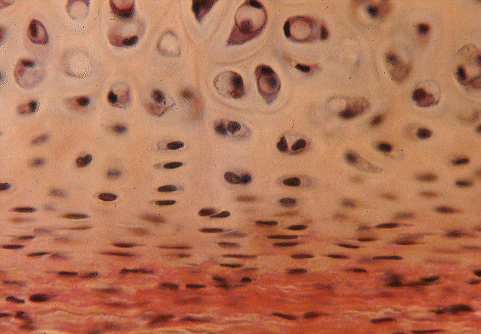
- Cartilage cells or chondrocytes occupy lacunae in a stiff flexible matrix formed from collagen fibres in a proteoglycan ground substance. Imagine the lacuna (plural = lacunae) as a cave in the matrix. The chondrocyte fills the lacuna.
- Hyaline cartilage has a white translucent appearance and occurs on the smooth surfaces of joints. In the larynx, trachea and bronchi, hyaline cartilage forms the rings that hold these air ducts open during respiration. Flexible units of the skeleton, such as the dorsal part of the scapula and the linkages between the sternum and the posterior ribs, also are formed from hyaline cartilage.
- Most of the bones of the carcass are initiated prenatally as cartilagenous models. Complete ossification is a slow process, and the bones of young meat animals are more flexible than those of adults. The state of ossification is a useful clue to animal age in carcass grading.
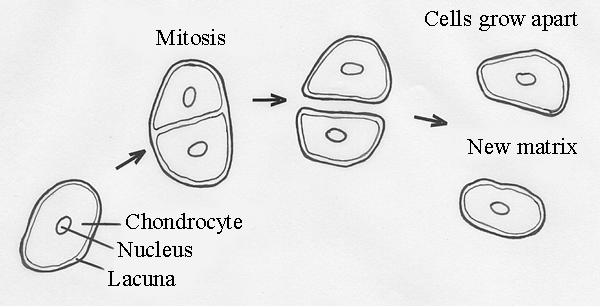
- Chondrocytes are derived from mesenchymal cells and are initially capable of both mitosis and matrix formation.
- Clusters of related cells are pushed apart by their new matrix in a process called interstitial growth.
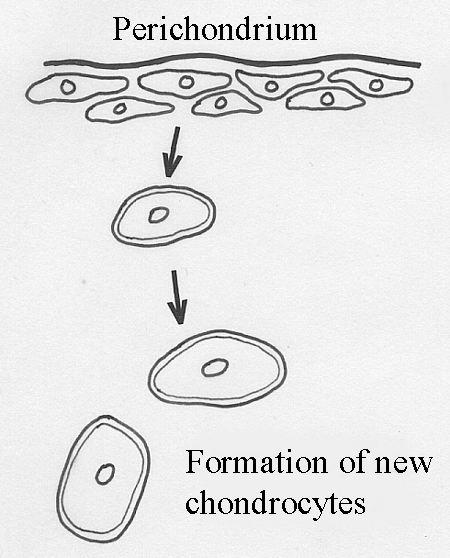
- Cartilaginous models of prenatal bones are covered by a membrane known as the perichondrium. Inner perichondrial cells differentiate into chondrocytes. Thus, in addition to interstitial growth, new cells and matrix may be added superficially in a process known as appositional growth.
- Cartilage may acquire numerous elastic or collagen fibres to become elastic cartilage or fibrocartilage, respectively. The dominant type of collagen in hyaline cartilage is Type II and accounts for 50 to 70% of dry weight. Elastic cartilage is found in parts of the body such as the ears and muzzle.
26.3 Bone
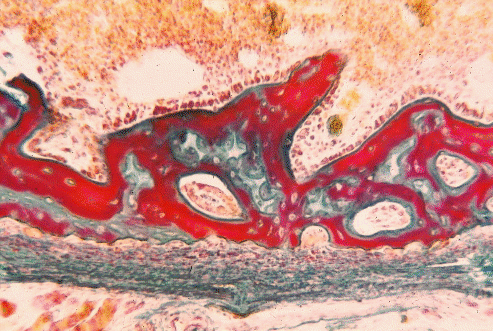
In the section of bone shown above, the marrow cavity is at the top, the calcified matrix is stained red, and the periostium runs acroos the bottom.
- Oxygen, nutrients and waste products may travel to and from the chondrocytes in cartilage by diffusion through the surrounding matrix but, when the matrix becomes ossified by the deposition of submicroscopic hydroxyapatite crystals, diffusion is greatly reduced.
- Bone cells, osteocytes, can only survive if they develop long cytoplasmic extensions radiating from their lacuna to regions where exchange by diffusion can take place. These cytoplasmic extensions run through fine tubes or canaliculi in the ossified matrix, but are limited in length. Consequently, large numbers of blood vessels permeate the matrix of bone.
- Most of these blood vessels run longitudinally through the bone in large haversian canals surrounded by concentric rings of osteocytes and bone lamellae.
- Bones are covered by a connective tissue membrane called the periosteum.
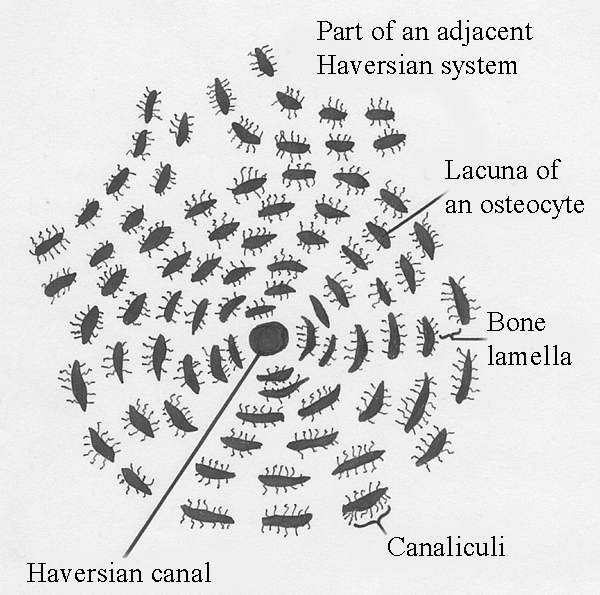
The prenatal formation of bone is initiated by either of two basically different processes, either intramembranous or endochondral ossification. Intramembramous ossification is typical of the bones forming the vault of the skull, and occurs when sheets of connective tissue produce osteoblasts which then initiate centres of ossification. Endochondral ossification is more common, and is the process by which cartilagenous models become ossified to form the bones of a commercial meat carcass.
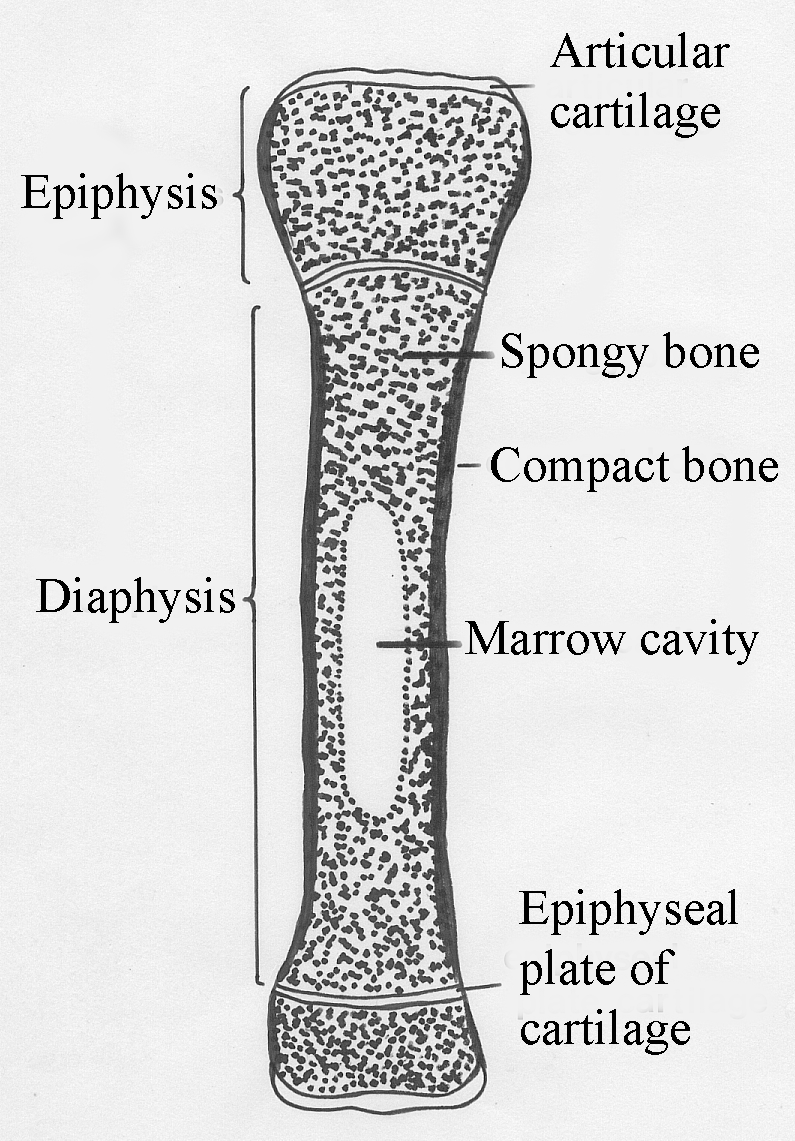
- The internal structure of carcass bones becomes visible when they are split longitudinally on a band saw .
- The shaft of a bone is called the diaphysis and often includes a marrow cavity with a variable amount of fat.
- The knob at each end of a bone is called the epiphysis.
- Between the diaphysis and each epiphysis is a cartilagenous growth plate called the epiphyseal plate.
- In a young animal, the chondrocytes of the epiphyseal plate are constantly dividing to form new matrix. However, on each face of the plate, cartilage is continuously resorbed and is replaced by bone. Hence, the thickness of the epiphyseal plate tends to remain constant in growing animals.
- This process allows a bone to grow longitudinally without disrupting the articular surface on the epiphysis.
- The rate of the longitudinal growth of bones is the product of two factors; (1) the rate of production of new cells, and (2) the size that cells reach before they degenerate at the point of ossification.
- The strength and thickness of epiphyseal plates is modified by sex hormones. At puberty, chondrocyte growth slows down and fails to keep pace with ossification on the surface of the epiphyseal plate. Thus, epiphyseal plates are lost in mature animals, and the epiphyses become firmly ossified to their diaphyses.
- However, factors regulating the closure of the epiphyseal plate in meat animals and, hence, the frame size of the animal, are poorly understand. Although regulation is likely to be an interaction between animal age and circulating hormones, there are no obvious hormonal changes when the plate closes and nutrition and management have a minimal effect. If whethers are implanted with estradiol the ossification of growth plates is accelerated.
- Bone growth in mature animals is restricted to the girth or thickness of the bone, and occurs by recruitment of periosteal cells to become osteoblasts in response to loading by body mass<>.
26.4 Bone calcium
- Radioactive calcium (45Ca) is used to study the uptake of calcium by the skeleton.
- There is a continuous exchange of calcium between the body fluids (mostly plasma) and approximately 1% of the total bone matrix which has`direct access to the circulating fluid.
- Growth by accretion results from small net gains to the matrix.
- When radioactive calcium is injected into a growing animal, the isotope is incorporated into new bone, and the concentration of isotope in the plasma declines.
- Both calcium exchange and calcium accretion are more rapid in the epiphysis than in the diaphysis.
- Calcium, phosphate and hydroxyl ions are obtained from the extracellular fluid during bone formation. The first stage in ossification is the deposition of a crystal of calcium phosphate, then calcium phosphate is converted to hydroxyapatite.
- The supply of calcium and phosphate from the blood is affected by vitamin D. Vitamin D is obtained from the diet or by exposure to ultraviolet light. It is hydroxylated in the liver and then converted to the hormonal form (1,25‑dihydroxycholecalciferol) in the kidney. The hormonal form causes the intestine to increase its absorption of calcium and phosphate.
- The resorption of bone enables bone remodelling in response to local stresses and is coupled with the maintenance of blood calcium and phosphorus levels.
- The organic components of bone are degraded by the lysosomal enzymes of osteoclasts, a process requiring vitamin A.
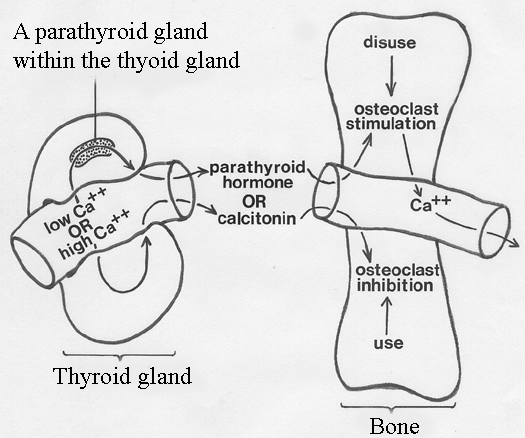
- The solubilization of hydroxyapatite in response to parathyroid hormone (from the parathroid glands) is achieved by a combination of low pH (due to anaerobic glycolysis) and chelation. Osteclasts (cells which erode bone) then release calcium into the blood stream.
- Osteoclasts are inhibited by calcitonin (from the thyroid gland) so that calcium tends to be stored in bone and the level in blood is decreased.
- Genetic defects in calcification and bone formation may occur in cattle. Typical signs are lack of calcification of the teeth and hypermobility of joints.
- In milk fever of cows (parturient paresis), paralysis and unconciousness may occur during parturition or early lactation. The condition is a result of drastically lowered plasma calcium and inorganic phosphorus levels, and may be treated by the injection of calcium borogluconate.
26.5 Control of bone growth
- Carcasses from young animals have a relatively high bone content because the skeleton is well developed at birth.
- As an animal grows to market weight, its proportion of bone decreases on a relative basis, because of the growth of muscle and fat.
- The long‑term control of bone growth is superimposed on the short‑term regulation of bone metabolism that occurs in response to changes in blood calcium levels or to remodelling in response to local functional demands.
- A number of hormones exert secondary effects on skeletal development. Thyroxine, insulin, somatotrophin and gonadal hormones tend to be anabolic. Estrogens may inhibit resorption of bone. Adrenal corticosteroids stimulate resorption of bone and inhibit the formation of new bone.
- In cattle, castration delays the completion of growth in epiphyseal plates. This is most noticeable in the distal bones of the limbs and enables the continued longitudinal growth of the legs. In the vertebral column, however, castration reduces bone growth..
- Removal of the ovaries from heifers causes an increase in the longitudinal growth of distal bone.
- Bone growth is regulated by transforming growth factor (TGF‑ß) and insulin-like growth factor I (IGF I).
- Breeds of cattle with a large mature size usually produce lean meat at a faster rate than early maturing traditional beef breeds with a relatively small adult size.
- Differences in adult size are produced by differences in skeletal growth.
- Meat quality is involved because large‑framed animals produce leaner meat during their production life span.
- Large‑framed breeds mature late and have a later cessation of linear skeletal growth at their epiphyseal plates.
- The time of maturation is related to the distribution and amount of adipose tissue in the carcass, particularly marbling fat, and could well be regulated by leptin, a hormone secreted by fat and involved with ingestive behavior and energy balance, mediated via a receptor in the brain. Thus, because leptin normally inhibits glycogen synthesis in muscle, decreased fat deposition may lead to abnormal glycogen accumulation, which predisposes pigs to abnormally rapid or extensive postmortem glycolysis, and to the formation of PSE pork.
- Differential bone growth between large and small breeds of cattle is usually established prior to a slaughter weight of 500 kg in males.
- Comparing present day cattle with those born 20 years ago, the faster growing modern animalsare longer in body, but not necessarily taller than their predecessors.
- Pelvic dimensions in cows of different breeds are related to the incidence of difficult calving or dystocia.
- Growth promotants may have little or no effect on skeletal development,
SOME HISTORY. In the early 1950s, attempts were made to use measurements of isolated carcass bones such as the cannon bone to predict the muscle to bone ratios of carcasses. Although the method worked satisfactorily when applied to a wide range of dissimilar carcasses, it was of little practical value when applied to more uniform commercial carcasses. Muscle to bone ratios improve as animals grow older or fatter, since longitudinal bone growth slows down in older animals and muscles start to accumulate appreciable amounts of intramuscular fat. Animal age is the dominant factor that determines muscle to bone ratios.
Further information
Structure and Development of Meat Animals and Poultry. Pages 96-106.lussiermounaticed1962.blogspot.com
Source: https://animalbiosciences.uoguelph.ca/~swatland/HTML10234/LEC26/LEC26.html
0 Response to "Bone Elongation Continues Throughout the Life of an Animals"
Post a Comment